
“Start With the Operator”: Chris Miller on the Art of Hotel F&B That Works
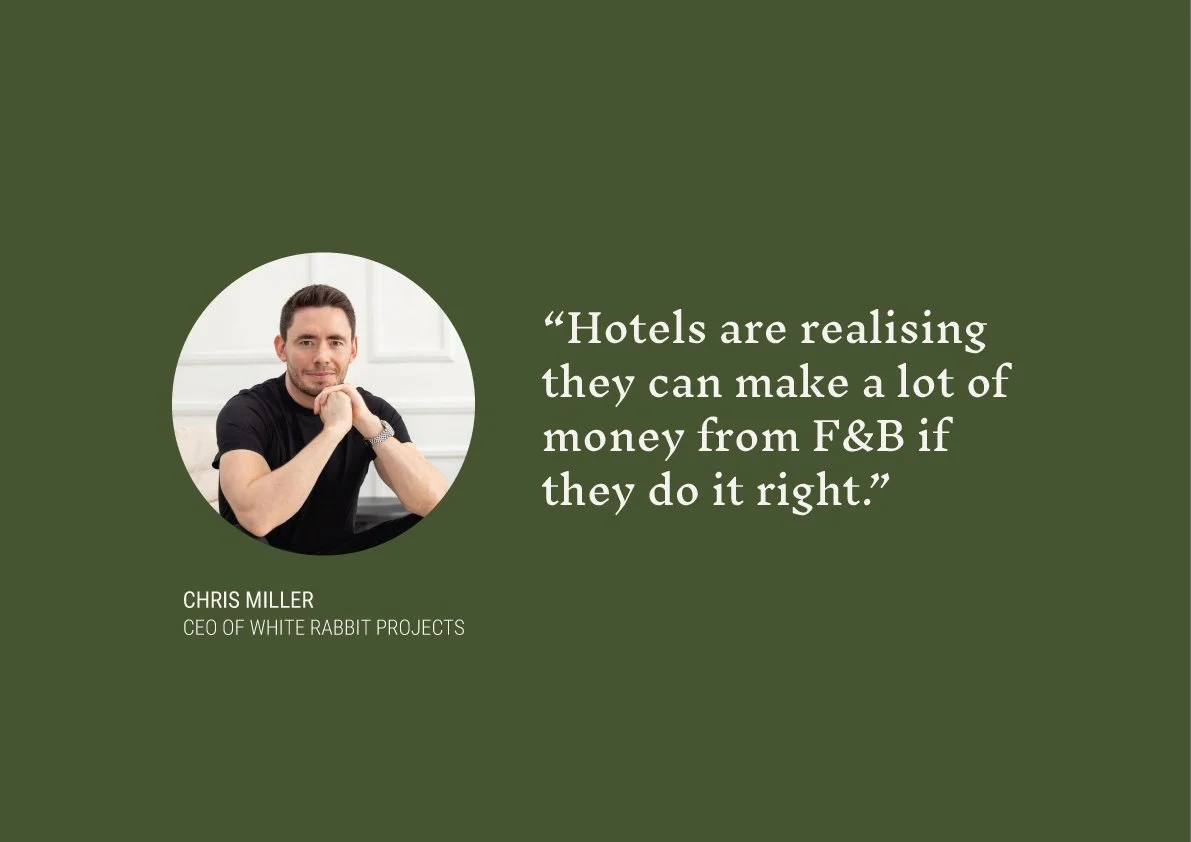
Hotel restaurants fail for many reasons — but according to Chris Miller, CEO of White Rabbit Projects, the root problem often appears long before the doors open.
“Hotels need to start with the operator,” he says. “Get them in the room early, before anything’s been designed.”
Miller has built his reputation developing and scaling some of the UK’s most recognisable restaurant brands, including Lina Stores, Kricket and Island Poké. Increasingly, his group works with hotels — a collaboration that reveals just how differently the two sectors operate.
“Hotels are built for consistency,” he explains. “Restaurants live on energy, creativity and emotion. It’s rare that one organisation excels at both.”
Understanding the Market Before the Menu
For Miller, successful hotel restaurants begin with a deep understanding of their local context.
When White Rabbit developed the F&B strategy for a major Lisbon hotel, the team spent days simply walking the city — visiting more than twenty restaurants, observing what worked and identifying gaps in the market.
“You can’t design a restaurant from behind a spreadsheet,” he says. “You have to walk the streets, feel the crowd, see what people respond to.”
Only once that understanding exists does it make sense to begin shaping the concept itself.
Partnership, Not Tenancy
Structure matters just as much as creativity. One of the most common mistakes Miller sees is hotels treating restaurant operators like tenants rather than collaborators.
“If you bring in an existing brand, you have to let them feel like it’s theirs,” he says. “They need emotional buy-in — they need to believe this is their baby.”
Equally important is financial alignment. Deals should ensure everyone succeeds together.
“No one should be getting rich from the signing fee,” he says. “Everyone wins only when the site wins.”
Design With Operations in Mind
For Miller, the biggest risk is designing a space before the operator has even been chosen.
“Too many restaurants are designed before anyone has thought about how they’ll actually run,” he says.
His advice is simple: bring the operator and designer together from the very beginning.
“Sit down with the plans while it’s still a shell. Map the flows — where the chefs move, where service happens, where waste goes. Otherwise you end up with something beautiful that’s impossible to operate.”
Clarity Over Complexity
Ultimately, Miller believes successful hotel F&B comes down to focus.
“You can’t be everything to everyone,” he says. “Pick the anchor — the moment or experience you want to own — and build around that.”
When hotels and operators work together early, with shared incentives and a clear concept, the result is something far more powerful than a restaurant in a hotel.
“You stop designing a space,” Miller says, “and start building a business.”
This is an extract from our wider report, Hotel F&B Insights 2026. You can download the full guide here.
