
“Blurring the Lines”: Ted Schama on Hotels, Restaurants and the Deals That Make Them Work
Hotel F&B is often discussed in terms of menus, chefs and interiors. Ted Schama looks at it differently.
As founder of advisory firm One Voice Hospitality, Schama approaches the subject through the lens of property, finance and partnerships - the structural forces that shape whether a concept ultimately succeeds or fails.
“It’s a bit oil and water,” he says of the relationship between hotels and restaurants. “Running rooms is easier than running a restaurant - fewer moving parts. But smart hotels can still win at F&B.”
His view is clear: the next generation of successful hotel F&B will come from better alignment between hospitality operators, property strategy and capital.
Two Industries, One Guest
Hotels and restaurants operate on fundamentally different rhythms.
Hotels prioritise consistency, systems and brand standards. Restaurants thrive on agility - constantly refining menus, pricing and concepts in response to guest behaviour.
That difference often explains why hotel restaurants struggle.
Hotels can move slowly, with multiple layers of approval, while restaurant operators are used to testing ideas quickly and adjusting in real time.
For Schama, the solution is not to choose one model over the other - but to borrow the strengths of both.
Hotels bring operational backbone and scale. Restaurants bring energy, creativity and responsiveness.
The Power of Partnership
When it comes to structuring hotel restaurants, Schama is direct: partnerships with established operators can unlock enormous value.
“All day long,” he says.
For restaurant brands, hotel collaborations can accelerate growth - particularly in international markets. Hotels provide the capital investment, while the operator brings reputation, demand and operational expertise.
But success depends on the structure behind the concept.
Whether it is a lease, management agreement, licence or hybrid model, incentives must align so that both sides benefit when the venue performs well.
Looking Beyond the Restaurant
One of Schama’s most important points is that hotel F&B should not be judged purely by restaurant profit and loss.
Instead, he encourages owners to step back and look at the bigger picture.
“Zoom out,” he says. “If a great restaurant breaks even but lifts room rate, occupancy and buzz around the hotel, that’s still a win.”
In other words, F&B can function as a strategic lever - strengthening the entire asset rather than simply operating as a standalone business.
The Future: Integrated Hospitality
Looking ahead, Schama believes hospitality will become increasingly interconnected.
Hotels, restaurants, co-working spaces, wellness facilities and social venues are already beginning to merge into single destinations designed for both travellers and local communities.
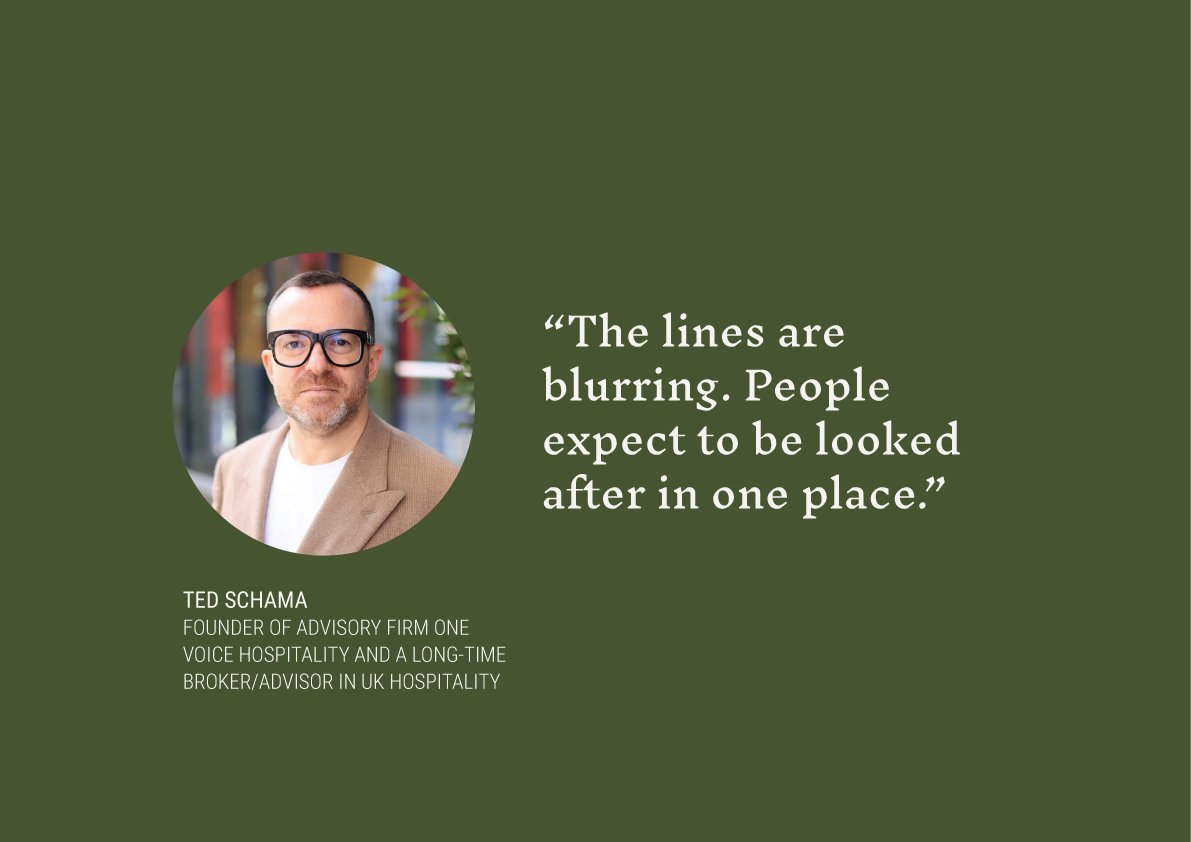
“The lines are blurring,” he says. “People expect to be looked after in one place.”
For hotels willing to embrace that shift and structure the right partnerships, F&B has the potential to become not a cost centre, but a powerful competitive advantage.
This article is an extract from our wider report, Hotel F&B Insights 2026. You can download the full guide here.
You can also find Ted here:
