
The Three Pillars of Successful F&B
Over the past year, I’ve spoken with a number of industry leaders as part of our Hotel F&B Insights 2026 series. Different backgrounds, different markets, different perspectives - but a clear pattern began to emerge.
Strip everything back, and every successful F&B concept rests on three fundamental pillars:
Strategy. Design. Operations.
If any one of these is misaligned, the concept will struggle. Not always immediately - the momentum of a new opening can mask underlying issues - but over time, the cracks will show. Long-term success depends on all three working in concert.
Strategy
The right thing, in the right place, at the right price.
Everything starts here.
A strong concept is not built on instinct alone, but on a clear understanding of customer, context and opportunity. Who are you serving? What does the market need? And where is the gap that only your concept can fill?
This is where many projects go wrong - trying to be too many things, or building around the wrong anchor. In a hotel, for example, breakfast is a given. It’s rarely the defining feature. The concept needs to be built around a moment that drives engagement - a lunch offer, a bar, a destination dinner.
Clarity is critical. The strongest concepts are often the simplest - but they are precise in their intent.
And importantly, strategy doesn’t stop at the idea. It extends to the team. The people delivering the concept must understand it, believe in it, and be capable of executing it consistently.
Design
Where concept becomes tangible.
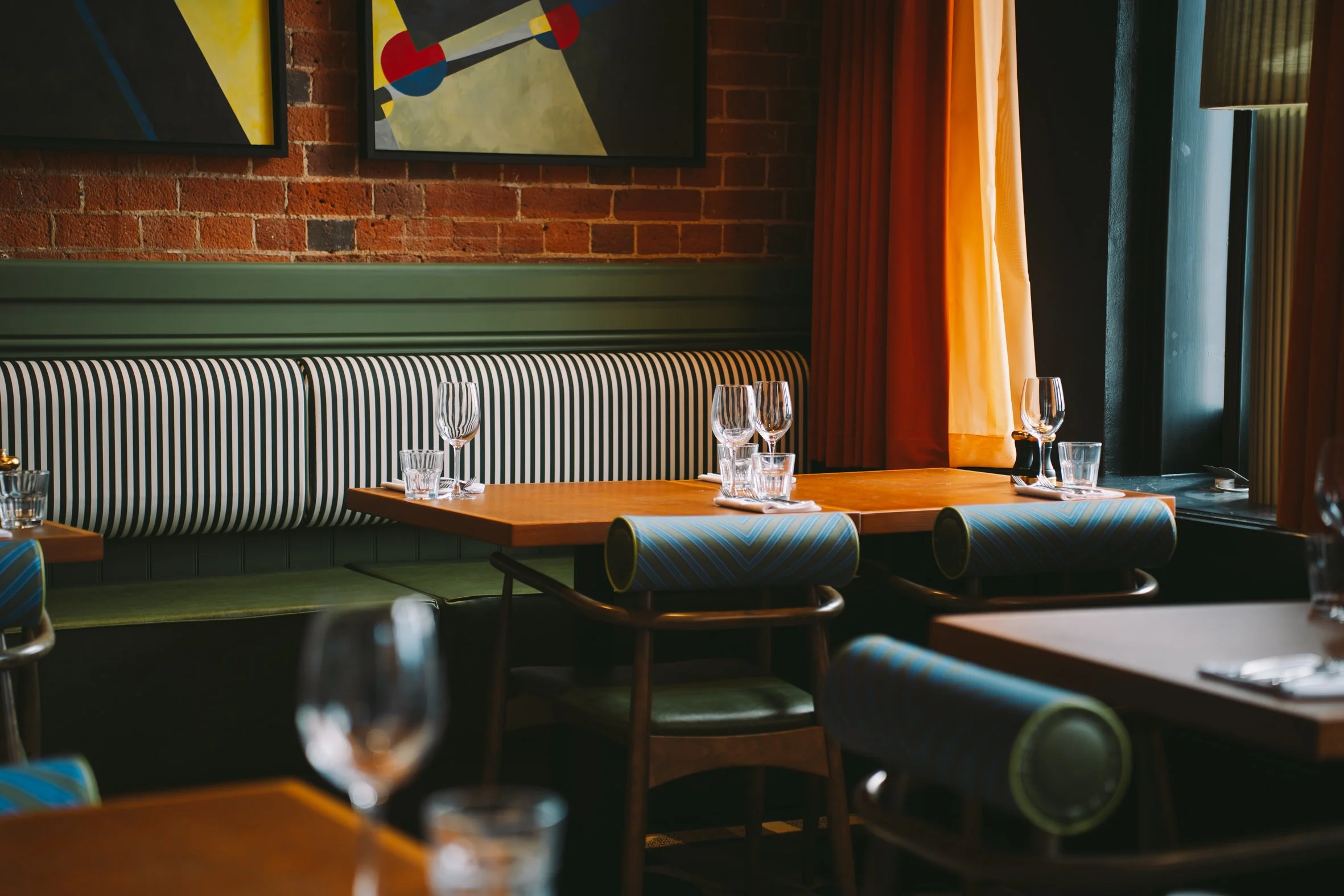
Design is often misunderstood as surface, a visual layer applied at the end of the process. In reality, it sits at the centre of the entire operation.
Good design translates strategy into something people can feel. It bridges the gap between concept and reality, aligning customer experience with operational requirements, and ensuring the space works as well as it looks.
Every touchpoint matters. From arrival to departure, the journey should feel considered and coherent. Not forced, not overworked - but intentional.
Design also defines identity. It communicates what you stand for, positions your brand in the mind of the customer, and creates a point of difference in an increasingly crowded market.
And then there’s atmosphere - the intangible layer. Light, sound, aroma, material, proportion. These are the elements that shape how a space is experienced, often subconsciously, but always powerfully.
Operations
Where everything is tested.
This is where ideas meet reality.
Even the strongest concept and the most considered design will fail if the operation doesn’t support them. Workflow, staffing, kitchen capacity, service rhythm - these are the mechanics that underpin the experience.
Poor planning creates friction. Bottlenecks in the kitchen, inefficient service routes, poorly sized spaces - all of these quickly undermine both customer experience and commercial performance.
Good operations, by contrast, are almost invisible. They allow everything else to work as intended.
But perhaps most importantly, operations are not static. No matter how well a concept is planned, people will behave differently to how you expect. The best operators observe, adapt and refine - continuously optimising the model over time.
Bringing It Together
What became clear through these conversations is that success in F&B is not about any one discipline in isolation. It’s about alignment.
A clear strategy, expressed through thoughtful design, supported by intelligent operations.
When these three pillars are in balance, the result is something that feels effortless - a place that works commercially, resonates emotionally, and endures over time.
And when they’re not, no amount of investment or visual polish can compensate.
If you're exploring the future of your F&B offering, we’re always open to a conversation.
